Why does the building's owners' association ask about a panelák?
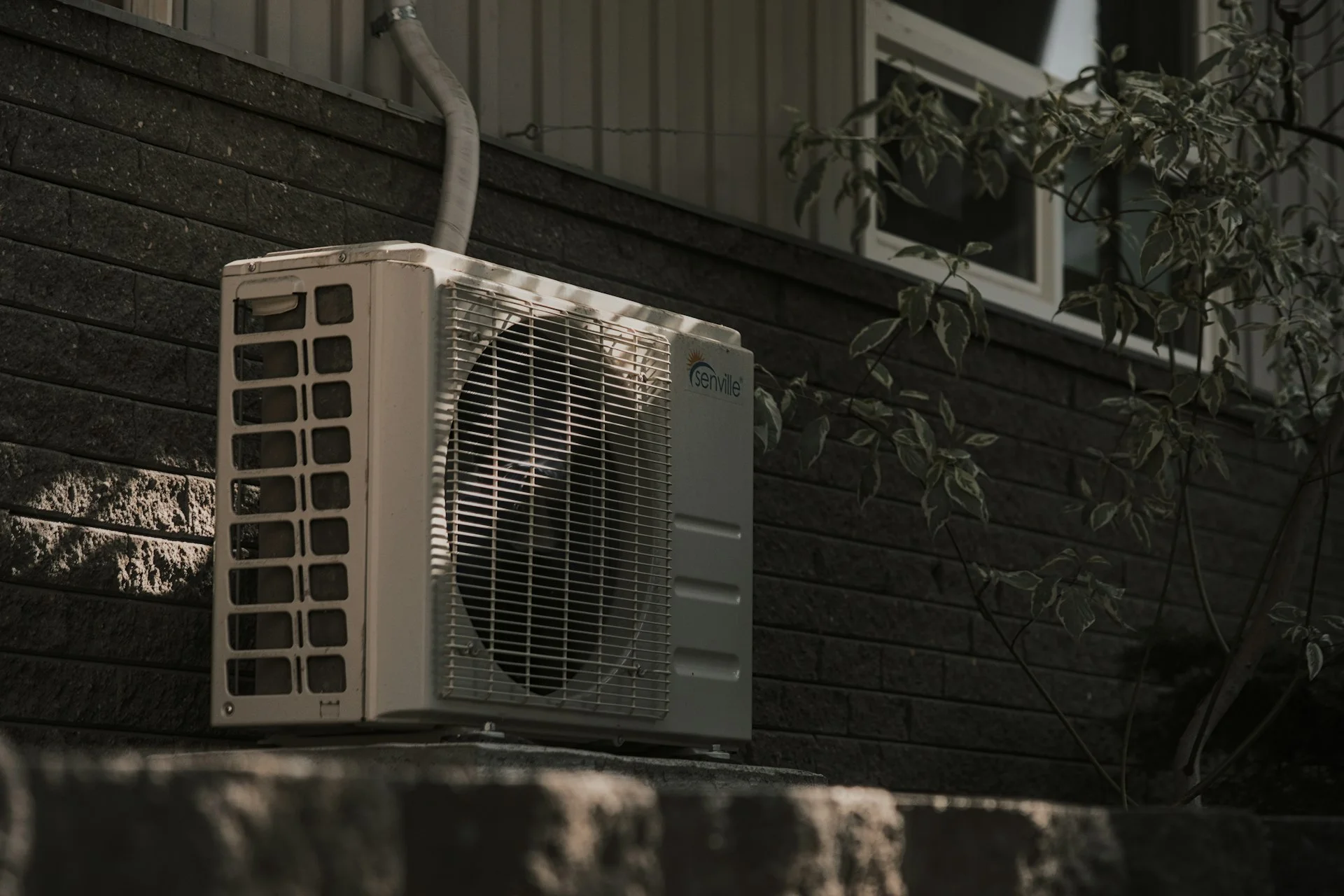
The facade of a panel building is a common area that cannot be dealt with by a single flat owner alone. The outdoor unit of an air conditioner is usually anchored to it, so the consent of the building's owners' association or housing cooperative is required before the technician arrives for installation. In practice, this involves a short request describing the location of the unit and possibly a photo or drawing of the facade.
We carry out our own survey before submitting the application. This makes it easier to describe exactly where the unit will be installed and how the piping will be routed. Upon request, we issue a certificate of F-gas certification, which the building's owners' association in Olomouc routinely requires with the application as confirmation that a qualified technician is handling the refrigerant.
Facade or balcony?
In apartment blocks on Nová Ulice and Povel, many flats have glazed loggias that are often more suitable for installing the outdoor unit than a bare façade. A unit placed on a loggia is less visible from the street, installation is usually simpler, and the pipe run into the flat is shorter. The drawback is slightly reduced airflow around the unit if the loggia is heavily glazed and poorly ventilated, however, this can be resolved by choosing an appropriate location within the loggia.
Where a loggia is absent or impractical, the unit is mounted on the façade—typically below the window or on a bracket one storey lower to avoid obstructing views and prevent condensate from dripping onto the pavement. In Neředín, where many 1980s-era homes feature deep balconies, the balcony railing with an appropriate bracket often provides the solution.
What to prepare before requesting consent
- Precise positioning of the outdoor and indoor units (preferably with a sketch following the survey).
- Information on condensate drainage so that the building's owners' association can see it will not flow uncontrolled down the façade.
- Certificate of F-gas certification for the technician carrying out the installation
- Installation date so neighbours can be informed as well.
Processing the consent takes varying amounts of time depending on how often the building's owners' association board meets, in some places it is a matter of days, elsewhere one must wait for the next meeting. Therefore, we recommend submitting the request immediately after the survey and scheduling the installation only after its approval.
Do you need documentation for an application to your building's owners' association or housing cooperative? We will determine the unit location during a free survey and provide the F-gas certification document immediately.
Piping routed through the concrete core
In a panel building, the pipe from the outdoor to the indoor unit usually passes through the load-bearing wall, which is typically thicker than the wall of a brick house, so core drilling is used for the passage. We extract the dust with an industrial vacuum cleaner, so no layer of dust remains on the balcony, loggia or in the room after drilling. Inside the flat, we then route the pipes along the shortest possible path to where the indoor unit will be mounted: usually along the window frame or in a corner of the room, so that the run disturbs the view as little as possible.
Condensate drainage must also be addressed; this is the water that drips from the outdoor unit during cooling. In a panel building, it is either connected to the existing rainwater downpipe if within reach, or routed via a separate hose so that it does not drip onto the pavement or onto the balcony one floor below. This is usually what the building's owners' association cares about most in their request: no one wants to deal with neighbours' complaints about dripping water.
Noise and neighbours
In densely populated apartment blocks, the noise level of the outdoor unit is also significant, especially if it is adjacent to a neighbour's bedroom or located below their flat. Modern condensing units are significantly quieter in silent night mode than older models; nevertheless, it is worthwhile to discuss placement with regard to where the wall runs towards the neighbouring flat. The technician will propose a location during the survey so that the unit operates effectively and does not cause unnecessary disturbance.
Whether it is an apartment in a block of flats in Nová Ulice, Povel or Neředín, the procedure is similar, survey, placement design, application to the building's owners' association and only then installation. The actual price, taking into account the type of block of flats, can be found at article on the course and cost of installation.
Consent from the building's owners' association is usually handled by the board or the chairman of the association, not by individual neighbours, so a single application with supporting documents is sufficient, rather than going door-to-door through the flats. If you are unsure who to contact within the building's owners' association, we will advise on how to draft the application, drawing on our experience with similar projects in housing estates across Olomouc.